Showing posts with label heroic bloodshed. Show all posts

Monday, 7 May 2012

Pointing In The Right Direction: A Look At The Directorial Work of Wang Lung-Wei - Part 2

Now it's time for the second part of my article series on the directorial work of Wang Lung-Wei. In my previous installment I looked at the earlier part of Wang's filmography leaving you with my thoughts on the thoroughly enjoyable action comedy The Innocent Interloper. Despite showing a deft hand for the genre it seemed when entering the next phase of his career he decided to get down and dirty once again and start directing serious crime action flicks. The first of which I'll be looking at will be the single film released by D&B Films. It is none other then Fury.


Released in 1988 Wang directs a film which owes more then a little to John Woo's all-time classic A Better Tomorrow. This doesn't help matters when one of the stars from that film Waise Lee is the lead. Lee plays Chou Chi-To, a small time criminal working with his best friend Lucky (Michael Wong) and Auyeung Chick (Philip Chan). The three are in Taiwan working a deal with a group of gangsters involving counterfeit bank notes when thanks to a double cross by Chou's cousin Chan Lau (Cheung Kuen) police arrive and a shoot out ensues. Chou, Chan and Auyueng manage to escape but Lucky is caught and arrested. When travelling back to Hong Kong by boat, Chan murders Lucky's wife Ngao(Carrie Ng) and shoots Auyeung who falls overboard. Chan's reason being that he was protecting his cousin. Years later Lucky is released from prison and is reunited with Chou. Chou lies about Lucky's wife saying she has gone missing and Auyueng being dead. When Chan learns of Lucky's return he decides to hatch a plot to get rid of him and tie up any loose ends that might bring down both him and his cousin.

As I mentioned before this film was produced by D&B Films. Long time fans of Hong Kong Action Cinema may now they were a production company founded by Sammo Hung, Dickson Poon and John Sham and produced some of the finest of examples of Hong Kong Action Filmaking in the history of the industry. Films such as Royal Warriors, Tiger Cage 2 and In The Line of Duty 4 were just some of the films they released that have gained strong fan followings. Fury is another solid entry in their canon of films and shows that as Wang's career progressed his skills as a director did seem to improve.


Unlike most of his previous films which featured smatterings of martial arts action. This time we are treated to some nicely done shoot outs as well as some quick but tightly choreographed martial arts. The shoot out in the beginning of the films which sees the protagonists take on Taiwanese police led by an eye-patch wearing Wang and another actor who seems to have appeared in almost all of Wang's films up to this point Shum Wai. Sadly they only appear as quick cameos but they partake in an excellent shoot out sequence that wouldn't look too out of place in a John Woo film. See what I mean about the A Better Tomorrow connection? I certainly don't blame Wang for making a film like this. Everyone was doing their own version of it so it only seemed natural that Wang perhaps tried to go with the trends of Hong Kong Cinema once more and try and deliver a film that might work for local audiences.

Sadly that kind of momentum quickly fizzes out as the middle part of the film is devoid of very little action. Although it has to be said that the acting performances are very good all round. Waise Lee gives a nicely understated performance as Chou most of the time but doesn't seem to be able to play it smooth whenever there are any emotionally heavy moments. He doesn't seem to be able to find a good balance but instead cranks from 1 to 11 in an instant whenever there's meant to be a point when things get heavy. The most lovable piece of wood to ever enter the Hong Kong Film Industry, Michael Wong is also pretty good. It's clear he can't speak Cantonese very well judging from his mouth movements but his some what cold acting style worked in the film's favour. It's worth mentioning that at one point in the film we see him giving a demonstration of his break dancing skills.


I don't know what was more weird. That fact there's a movie with Michael Wong break dancing or the fact that Wong is actually GOOD at it. Either way it was a throwaway moment but one I'm sure Michael enjoyed filming. Philip Chan does what Philip Chan always does play it serious and gives a good solid acting performance all round as a man who is out to kill Chou for his cousin's betrayal. My favourite acting performance out of the whole thing has to be Cheung Kuen as Chan Lau. Having pretty much worked on all of Wang's movies as what I think was a producer, Cheung gets his biggest and best acting role in a Wang Lung-Wei film. Mixing loyalty and deviousness Cheung creates a character who is so despicable that you can't help but hate how slimy he can be. Whether he's kissing up to local police to keep him out of jail or planning to off Lucky in some painful and possibly humiliating way, Cheung's performance is definitely one to watch out for.

In terms of the story things do certainly pick up when entering the final act. Lucky is taken into custody for an earlier shoot out in the film and when he's being transported by van they are attacked by Cheung and his cronies. Chou comes to the rescue with the help of Auyeung and his son Wen. This is when we get a pretty well done shoot out which is funny when you realise the whole thing is happening around a van and a truck. Yet with Wang's skills as an action director he's able to keep the tension at a good pace and keep the action flowing in a way that is immensely satisfying.


Fury is a great crime action thriller that while not perfect (Which Hong Kong film during the 1980's was?) is still worth watching and shows that Wang Lung-Wei's skill as a storyteller did improve and also showed that he can be extremely versatile in the type of action he could portray on screen. 1988 wouldn't be the only year Wang would release a film. That year saw him put out what I think is an incredibly fun and highly recommended action film starring one of my favourite Hong Kong actors Dick Wei and the underrated but oh so good at kicking ass Ken Lo. What film is this, I hear you ask? It is of course, City Warriors!


City Warriors tells the story of Lok-Han(Wei), A soldier from Mainland China who arrives in Hong Kong looking for his estranged sister Ling. Meanwhile Ling is working as a prostitute thanks to her rather unlikable husband Tang Sai-Kit(Lo). Lok decides to track her down with the help of a tourist group supervisor Ying (Carina Lau) all the while avoiding her police man uncle, Detective Mak (Ko Chun-Sung).

The first thing you'd notice about City Warriors is that it's working with an even smaller budget then any of Wang's previous films. Not that it matters as he was able to craft a film that while storywise is incredibly simplistic has some very good and well put together action sequences thanks mostly to having two capable leading men in Dick Wei and Ken Lo. The film opens with a stakeout led by Mak in which he is waiting to nab a group of people known as The Mainland Gang. A group of criminals who have a reputation of coming into Hong Kong and just ruining everybody's day. When three of the gang show up it quickly turns into a bloody shoot out that ends up with Mak chasing one of the criminals onto a bus. Wang's reputation for getting innocent people caught in the cross fire of his character's actions come into play here but thanks to some quick thinking from Mak he's able to subdue the criminal.


I really enjoyed this particular sequence because we get some nice stunt work and lots of bullets flying and it perfectly sets the tone for just how dark and violent a movie you're going to watch. From then on we get a very breezy, no nonsense story line. I always admire this aspect of Wang's movies. It's clear he's not a director who likes to stretch things out and much prefers getting straight to the point. This is reflected in both his style of action and his style of story telling. His movies may not have been award winners or even worthy of a nomination at local film award ceremonies but I find it admirable that he was someone who just wanted to tell good stories about characters in serious and brutal situations.

I actually liked the story in this one. I think this mostly had to do with the characters. Dick Wei's Lok-Han as the stoic soldier was played pretty much to perfection. Wei was never the best of actors so this character suited him to the ground. Ken Lo seems to enjoy playing the sleazy Tang. I love when you can see an actor clearly enjoying themselves. It can seem a little self-indulgent but come on who wouldn't enjoy being the bad guy? let's be fair here, they are always more fun to play because they aren't restrained in a way a heroic character is. They can do things the good guys can't. One actress I wasn't expecting to be in this was Carina Lau. One of my favourite Hong Kong actresses, it was a delight to see her appear in this. Her role is strictly wall-flower material but I still liked seeing her. 


Ko Chun-Sung as Mak is another decent performance. What I liked was even though he's a police detective he isn't perfect. He has a deep-seated hatred for Mainland Chinese. This is mostly due to the fact he has a bullet lodged in his stomach from being shot by one of the Mainland Gang so when he meets Lok-Han he is extremely distrustful of him. Also he carries around a .357 magnum because it's mentioned that the character likes to think of himself as a Dirty Harry style detective dispensing justice one bullet at a time. Guess who else appears in this movie. Go on, guess. If you answered Shum Wai give yourself a pat on the back. Yes, Shum Wai once again appears in a film directed by Wang Lung-Wei. At this point I'm beginning to think the two must have been good friends and were willing to help each other out. Wang himself made an appearance in Spiritually A Cop, a film directed by, you guessed it, Shum Wai. I haven't seen that particular film yet but I will be getting my hands on it soon so I may review it but that will have to wait.

Shum Wai plays what has to be one of the more unusual roles I've seen him play. A Homosexual pimp by the name of Big Sister. He struts around in an effeminate manner wearing gaudy clothes and make up. I have to at least give the man credit for trying to be different each time he appears in Wang's movies. It's fun to watch him play around and make his co-stars uncomfortable with his a little too believable portrayal of Big Sister. Lastly we have Yuen Chor as a corrupt politician. What I did find silly was that Wang was trying to hide the fact that it was Yuen playing this role. He would often have extreme close ups of his mouth or have his head out of shot but it is so clearly Yuen that when the dramatic reveal is made it's completely wasted. Why he wanted this characters identity hidden is beyond me. Had he introduced his character earlier as someone who seemed to be on the side of good then later revealed his true nature then yes there would have been a need for it but considering you don't know who he is until the big reveal it just seemed like a waste of a plot device.


Problems with the story aside we do get some great action scenes. As you'd expect with guys like Wei and Lo as the main characters we get to see them do what they do best, throw kicks and make it look like it hurt. Especially Wei who had a reputation for being a hard hitter which made many an actor and stunt man reluctant to work with him. Lo also shows his talent as probably the most underrated boot man who worked in the industry during this time. He would be used to amazing effect in Jackie Chan's Drunken Master 2 but elsewhere he never really got to show his stuff. In films like this there would be bursts of it but he never got to be full on and that's a shame as he is an immensely talented martial artist. Both actors get their fair share of hand to hand combat and Ken Lo gets involved in a wonderful shoot out which sees him taking on the police armed only with a shotgun.

Now as you'd expect both Wei and Lo do end up clashing in the final moments of the film but it's not what you'd expect. The choreography is less stylised. For two people who are experts at kicking I was expecting more incredibly  brutal on screen fighting but it seems Wang couldn't quite figure out how to pull it off so we get a straight up bloody fisted brawl. It's good for what we end up with but he ends up selling both Wei and Lo short. City Warriors is still a decent and in some ways fun to watch action thriller and if you're a Dick Wei fan like I am you owe yourself to track it down and give it a watch.

Now it's time to talk about what is Wang Lung-Wei's most successful film financially. Although I think that has to do more with who is starring in it. Bringing together a top cast (Wang always seemed to have great casts for his films) in a story of brotherhood, violence and redemption, 1989 was the year Bloody Brotherhood was released.
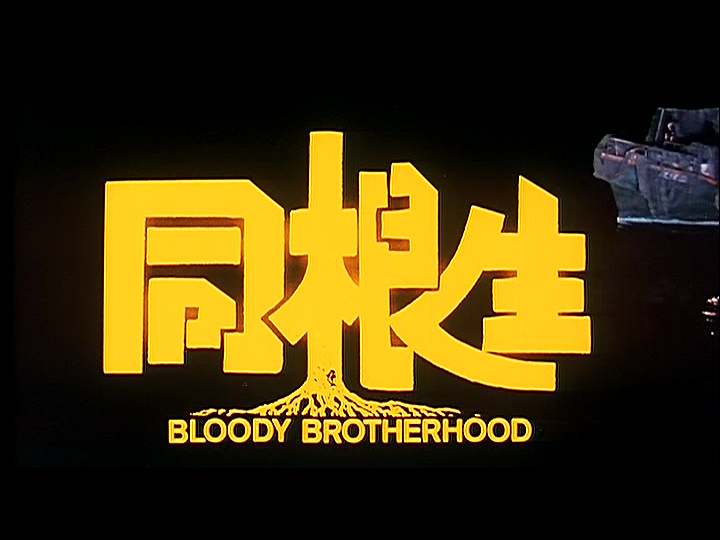


Andy Lau stars as Cheung Ka-Wah who is travelling from Mainland China to Hong Kong with his brother Ka-Wai (Lam Wai) and his mother and father. Their boat is intercepted by Border Patrol and in an ensuing gun battle both his parents die, Wah is shot and falls overboard and Wai is arrested. Wah washes up ashore and is taken in by Chiu (Irene Wan) and her father. Wah decides to finally make it in Hong Kong which was seen as a land of opportunity but soon falls fowl to a group of local Triad. When he confronts their boss Tong Fai (Chan Wai-Man) he's offered a place with his crime family and this sets in motion a series of events which will eventually lead to a bloody climax.

Prior to watching this I went into it with mixed feelings. I had read several rather unflattering reviews which didn't paint the film in a particularly good light so my expectations were a little low. However in retrospect I'm glad my expectations had been lowered because Bloody Brotherhood is an extremely enjoyable late 80's Triad Action Drama that while it lays on the melodrama a little thick some times does actually make for a decent watch. Unlike Wang's previous films that used lots of gunplay, Bloody Brotherhood goes the Hong Kong Godfather route and uses lots of stylised brawling for it's action sequences. Also like Hong Kong Godfather, Wang has assembled a cast that is more then capable of fulfilling what is required. Andy Lau shows that he's more then just good looks and a wonderful singing voice. For someone who was never formally trained he does exceptionally well. More so then any other actor who performed martial arts during this time.


I often find that when you take an actor who doesn't have any extensive training and throw them into a fight scene, they can come off as incredibly stiff and uncoordinated but Andy doesn't seem to suffer this problem and looks very natural throwing kicks and punches. Another astounding fact about Andy is that Bloody Brotherhood was one of seventeen movies he acted in during 1989. Seventeen?! I think it's safe to say Andy was and still is one of the hardest working actors in the Hong Kong film industry and for that alone he has my respect and admiration. His acting performance in this is good all round. He gives his scenes the right emotional content required without it coming on too stilted and just goes to show despite this being a very busy year for him, he never let his acting slump in anyway. Also for someone who was essentially a big pin-up idol he's not afraid to go against his image and play someone who can be impulsive and violent.

If you look at his filmography he's had a very versatile career in terms of the characters he has played and Bloody Brotherhood is just one of many dark and violent Triad dramas he's appeared in during his long and successful career. Helping him make Bloody Brotherhood a wild and crazy ride are his co-stars. Lam Wai plays his brother and he gives his usual caliber of acting as well as shows his talent for hand to hand combat. Lam Wai is an actor who, much like Andy, has appeared in many crime dramas and has a reputation among fandom as being somewhat under-appreciated but Bloody Brotherhood is a good example of why fans like him so much. Chan Wai-Man gets what I feel is a rare opportunity to do some great acting. Tong Fai is a character that goes from being on top of the world to being right under it thanks to some underhanded tactics from his rival played by Shum Wai. Yep he's here yet again this time playing a character closer to the one he portrayed in Hong Kong Godfather.


There's a rather touching scene when Wah and Tong are reunited after Tong has spent a few years in prison. It's here we realise just how far he's fallen and has gone from someone who commanded his own family to a man forced to wash windows to make a living. It's a scene that comes right out of A Better Tomorrow and pretty much conveys without dialogue Tong's situation entirely. Also Chan gets to have a really great brawl with Philip Ko who makes an appearance as a hot-headed Triad looking to make trouble. It's short but seeing these two veterans go at it was fun to watch. Playing Wah's wife is Irene Wan. Like Carina Lau in City Warriors her character is nothing more then the wall flower. It seems unless female characters are kicking a serious amount of ass then he doesn't seem interested in them. Although my opinion on that could change when I get round to talking about Widow Warriors and Escape From Brothel.

I touched upon earlier the type of action Bloody Brotherhood contains and what we have here is a surprising amount. Andy even gets to go toe to toe with none other then Dick Wei. It seems Wei must have enjoyed working with Wang Lung-Wei that he readily agreed to make a quick appearance here. Their fight is nothing fancy but it does look like Andy's arms take some abuse from Wei's fists. The choreography was provided by Hung San-Nam and Tony Tam. Two stuntmen and actors who have served as action directors on a few other films. Tony Tam also did the fight scenes for Fury and also for Escape From Brothel. The moves are nothing fancy but it's pretty brutal and hard hitting. I couldn't help but keep comparing this to Wang's earlier film Hong Kong Godfather. While storywise they share very little similarities. There was just something about the tone of the film that kept bringing it into my mind.


I think one of the reasons for this is because things turn insanely violent toward the end of the film. After going through absolute Hell, Wah has had enough and decides to take out Shum Wai's character and storms a restaurant armed with a saw. Something Cheung Kuen used to great affect in Hong Kong Godfather. The gore is nowhere on the level as that film but the way the brawl plays out and the fact everyone looks like they're trying to genuinely kill each other does make the two more comparable. I loved this fight. I like it when films are not afraid to really crank up the brutality if it helps make the film work all the more better for it and while sometimes it might go too far and end becoming distracting and clashing with the rest of the film, Here it does just the trick and we end up with an all out finale that makes it worth seeing.

Bloody Brotherhood probably won't be held in high regard among other Hong Kong film fans as it really doesn't do anything original to make it stand out but what we do have is a solid entry into the genre that has good acting performances from it's principal cast and some bloody and intense action scenes. Worth seeing if you're a junkie of the Triad genre.

So concludes the second part of the article. Hope you all enjoyed reading this as much I liked writing. Be sure to check back soon for the concluding entry as we look at the directorial work of Wang Lung-Wei.

Sunday, 29 April 2012

Pointing In The Right Direction: A Look At The Directorial Work of Wang Lung-Wei - Part 1

This is it folks, what you've all been waiting for. My huge three part look at the directorial work of fan favourite Wang Lung-Wei. For those who may not be familiar, Wang Lung-Wei started out as a contract player with the prestigious Shaw Brothers studio. He landed his first major supporting role in Chang Cheh's Shaolin Martial Arts in which he played a monk which specialized in the Iron Stomach technique. From that point on he would appear in dozens of films, many that include such bona fide classics as New Shaolin Boxers, Avenging Eagle, Ten Tigers Of Kwantung and many more. With his no-nonsense approach to acting as well as being extremely committed to performing martial arts, Wang Lung-Wei has risen to become one of the most recognizable faces in Hong Kong Cinema.

With numerous films under his belt, some of which saw him working with the venerable Chang Cheh, Wang thought it was time he applied what he had learned and embarked on a career as a script writer, choreographer and director. While still under contract with Shaw, Wang called in some of his acting buddies as well as a few fresh faces and made his debut as the writer and director of This Man Is Dangerous AKA Shandong Madman released in 1985.


In it we're told the story of two young police officers played by Chin Siu-Ho and Cheung Chin-Pang who are transferred to CID in hopes of furthering their careers within the department. Things don't quite go the way they planned when Chin inadvertently insults one of their superior officers played by Lam Fai-Wong. Deciding to mess with them a little bit he assigns them the task of getting a set of finger prints from a dead body in the morgue. Now this particular sequence had me scratching my head because I've seen enough episodes of CSI to know that the police have whole departments to take care of that. Also when the two hapless cops go down into the morgue the floor is littered with corpses. Why? Had they run out of storage space? or did they just have some of the laziest morgue attendants working there?

Either way we're treated to some grating comedic verbal exchanges as Chin and Cheung argue over who has to get the prints. This scene went on just a little longer then I would have liked and since Wang was the writer it seems he has quite a morbid sense of humour given what we've witnessed through out the scene. From there we move to a scene which sees our moronic leading men given the task of apprehending a drug dealer by the name of Pink Lady played by the ever dependable Elvis Tsui. It's here we finally get to see Wang's talents as an action director as the two leads engage in a martial arts showdown against a group of thugs in a night club. His style of fight choreography is very much like his acting, no fancy moves just simple kicks, punches and take downs. Though it was a little difficult to take seriously as Chin Siu-Ho was dressed like he was auditioning for the live action version of Double Dragon.


Through out the earlier parts of the film we see Wang Lung-Wei as a violent criminal making dirty deals with a gangster played by Cheung Kuen. Most of these scenes are pretty routine Hong Kong gangster posturing. In fact the first hour or so of the film's run time is pretty unengaging for the most part. except for the scenes which feature Wang. There's a particularly harrowing scene in which he and his gang gun down a restaurant full of people with hand guns stolen from a group of cops earlier in the film. This scene shows that Wang was not going to be shy about showing violence on screen, especially when it involved innocent people.

I get the feeling this is something Wang had learned from working with Chang Cheh. Chang was a director who had no hesitations about killing off characters in his movies. If he absolutely, positively had to kill every main character, he would do it if it meant being able to tell a good story. I have to admire Wang's attempt to tell a good story here. Unfortunately most of it isn't good at all and is pretty typical Hong Kong Cop Caper fair that was extremely common place around this time. It's worth sticking with it though. Oh boy is it worth sticking with it because once we enter the last half hour of the film things turn extremely dark and extremely violent when the police have had enough and decide to go after Wang and his group.


I've seen a lot of Wang Lung-Wei's films and it's safe to say I have never seen him play such an angry, violently psychotic character before or since. While in films like Mercenaries From Hong Kong he did play short tempered but street tough characters, here we have him playing a completely unsympathetic lunatic. This is where Wang's strengths as a director start coming into play. He's able to keep the tension at a level which will keep you glued to the screen. Where else will you see him take on over a dozen police officers armed with nothing more then a pissed off attitude and an Uzi sub-machine gun? not in any other movie made around this time I can assure you.

This Man Is Dangerous isn't the perfect movie but it's a pretty solid debut for someone who obviously wanted to tell a story in his own unique style regardless of whether or not people liked it. When it was released it wasn't a particularly big hit at the local box office but Shaw Brothers were obviously more then happy to let him direct another film under their banner which leads us to our next film and one which is very special to not only myself but a number of my fellow fans and bloggers.


Released in the same year as This Man Is Dangerous, Hong Kong witnessed the arrival of an incredibly ambitious and blood soaked tale of Triad revenge on the streets of Hong Kong. Starring the trio of Leung Kar-Yan, Tsui Siu-Keung and Cheung Keung, Hong Kong Godfather sees them play a group of Triad brothers out to avenge the death of their uncle Han (Sek Kin) after the betrayal of Rotten Chi (Shum Wai) in order to help Lan (Wong Chun) gain territory and become the number one Godfather. After completing This Man Is Dangerous it seemed Wang had a little bit more money to play around with and as such the production values while still on the low budget side are much better spent on Hong Kong Godfather. What really sets this apart from Wang's previous film. is with that film the central characters were police officers and as such we saw them as well, nice guys for the most part who don't do anything particularly amoral or anything that could be considered a crime. This time however with Wang having written the script once again, we're following Triads and as such the film's narrative and characteristics aren't constrained by what a character can and can not do. 

The character Rotten Chi in particular is very much the catalyst that sets the course of events in motion that puts our film's heroes on a bloody, violent path of retribution. In the earlier scenes of the film we see him trying to kiss up to Han in an attempt to get in good. It's when Mad Wei (Kar-Yan) enters the picture that we see Chi's jealousy get the better of him and so when Lan makes him an offer that will help him gain better standing in the underworld he accepts. However in the later scene which sees Chi murder Han we finally see that he almost regrets what he is doing but knows that there's no turning back and shows no mercy as he stabs his beloved uncle to death. Shum Wei's face pulling may come across as a bit silly during this scene but it works as it shows just how emotionally damaging this is to him. As mentioned before innocent people don't fare too well when Wang Lung-Wei is directing and not only do we see the death of Han but his entire family including his 8 year old grandson who meets his demise by having his spine smashed before being thrown through a glass window.


Hong Kong Godfather is not a comedy, it's a dark, serious, angry and vengeful film that pulls no punches and spits blood on your face in order to show you these guys do not mess around. Wang also stretches his choreographic muscles a little bit more this time round. Much like the brief moments of hand to hand action in This Man Is Dangerous, the fighting here is simple with a little bit more stylistic edge to it. Almost every character uses a big chopper knife and this gives the scenes a little bit a swordplay vibe but the choreography is still grounded enough so that it doesn't become distracting or out of place. However the film isn't entirely flawless.

The acting, shall we say is pretty bad for the most part. As I mentioned in my previous column Leung Kar-Yan's performance is incredibly uneven. While he was an extremely talented screen fighter and has appeared in some brilliant Hong Kong films, he's never been the best of actors and Hong Kong Godfather does nothing to dis-spell that. During Han's funeral scene you can see he's trying hard to be all upset but all comes off as a bit silly. In fact, that's one of the reasons we and a few others love this film so much, it has so many mad things going on. Just look at Tsui Siu-Keung's hair for instance. Go on, just look at it:


See how ridiculous that things looks? it just screams 80's style right at you and the Sonny Crockett look doesn't help but I can't begrudge it too much since I'm a big fan of Miami Vice. Another what the hell were they thinking moment comes from the pet dogs belonging to Leung Kar-Yan's character. They end up actually playing an important role in the film, especially the German Shepherd Stallone who comes to his master's aide when they're attacked by Rotten Chi and his men. Still for all these crazy moments the closing reel of the film sees one of the most bloodiest, most violent and angry finales ever committed to a Shaws film and that's saying a lot given this was a studio who let Chang Cheh put his characters through the meat grinder during his heyday.

When the brown stuff finally hits the proverbial fans we see our three heroes storm the headquarters of Lan. This is were I think a lot of the budget was spent. Lots and lots of bright red fake Shaw Brothers blood. Seriously, there's a whole lot of bleeding happening during this finale. Wang literally paints the walls with his characters blood and it creates such a vivid image seeing all that red splashed against those clean white walls. The fight which takes place on the stairwell is incredibly brutal and sees our heroes take some seriously fatal hits but somehow manage to pull through. Tsui in particular gets it right in the neck but since he's so tough he just shrugs it off and becomes even more pissed off then he was before.


If you're wondering if Wang Lung-Wei himself appears? he does in a couple scenes. One in the beginning which sees him gun down a group of people in a Casino using the same Uzi from This Man Is Dangerous and toward the end when he fights Leung Kar-Yan in a brief but nicely done fight. Hong Kong Godfather is a memorable piece of 80's Hong Kong Crime Cinema, if only for the fact that it's so clearly out of it's own mind that it's determined to entertain you one way or the other. Upon it's release it wasn't such a huge hit but movies like this rarely were but this didn't deter Wang from pursuing his career as a film maker further. This time directing something less serious and directed a film that fits more into the action comedy mold that had become extremely popular in Hong Kong during the 80s.


After leaving Shaw Brothers in 1986, Wang directed The Innocent Interloper. A slightly more formulaic but incredibly fun action comedy about a social worker, Shee (Lawrence Ng) who unwittingly comes in possession of a pair of counterfeit money plates and finds himself being pursued by a group of gangsters led by Big Boss Cheun (Chan Cheuk-Fai) along with his right hand man Wicked Brain (Shing Fui-On) but manages to get help from his wayward father (Shum Wai) a tough as nails female fighter, Siao (Elaine Lui) and her brother Paleface (Hwang Jang Lee)

Forgoing any type of serious tone, Wang Lung-Wei directs a film that falls comfortably into to the huge list of action comedies which saw release during this time. Perhaps Wang realised if he wanted his films to be more successful then perhaps he should give them the type of film people liked. Of all the films I've looked at so far, The Innocent Interloper is probably Wang's most accomplished in terms of pacing, characterization and action direction. There doesn't seem to be any filler or terrible acting moments here. Each scene serves a purpose to the story no matter how brief it may seem. The opening especially sets the tone as we see Paleface escaping from a group of thugs having just stolen the counterfeiting plates from Cheun. We're treated to a surprisingly long and wonderfully choreographed action sequence which looks to have been inspired by Jackie Chan featuring lots of quick exchanges and high impact stunt work.


From there we're introduced to the film's key players including Shee, his father and Siao. Lawrence Ng does well enough, especially in some of the film's more quieter character moments, Shum Wai hams it up as his father and shows why he was one of the better actors in Hong Kong Godfather. Hwang Jang Lee meanwhile does what he does best, look like someone ate his lunch and kick people in the head. However the real stand out for me was Elaine Lui as Siao. I was familiar with Elaine, having seen her in a couple other Hong Kong movies but Innocent Interloper marked her acting debut and it has to be said she leaves quite an impression. Not only is she extremely good looking and a decent actress but she handles herself incredibly well during her many fight scenes. So well in fact that Elaine could have given Michelle Yeoh a run for money as the Queen of Hong Kong Action had she appeared in more films like this.

Shing Fui-On also earned himself lots of screen time as the bumbling Wicked Brain. He does a good job here and proves why he was one of more underrated character players working in the industry. To add to the whole Hong Kong Action Comedy vibe there's a ton of cameos thrown in from guys like Wong Yu and Bill Tung to Wong Jing and Chan Wai-Man. Cameos were a big thing during the 80's. That's what I love about these types of films, you always find yourself pointing out people you recognise. However those cameos don't stop the film's narrative in it's tracks and keeps the story moving at a pace so it doesn't become boring. Unlike Wang's previous films as director, the script was written by Huang Ying, who was the writer of films such as The Loot, Close Encounters of a Spooky Kind and Those Merry Souls. It pretty much shows that while I admire Wang's talents as a director his writing did leave a lot to be desired most of the time so it was a good move to bring someone else on board and help craft the story. Although it seems Wang didn't bother with a composer as all of the music ques have been lifted from other movies including Jackie Chan's Armour of God.


What sets Innocent Interloper apart from Wang's other movies besides the tone and characterization is the amount of action we're given. There's quite a lot in here. In fact more then I had originally anticipated. There is a truly wonderful sequence which sees Elaine fight off a group of thugs, while for some of the move it's obvious she was doubled but for the most part you can see it was her. There's a rather painful moment which has poor Elaine take a full on kick to the back of the head and it's a wonder she wasn't seriously injured. Hwang obviously gets to show off his fancy leg moves and has a very good fight with Chan Cheuk-Fai. a martial arts  practitioner who has only appeared in a handful of films and TV series throughout his career but I would hazard a guess and say that his fight against Hwang is probably the best he's ever done.

As you can tell I really enjoyed Innocent Interloper as Wang Lung-Wei has directed a film that is incredibly fun to watch and shows that he's  capable of doing more then just violent crime movies. Unfortunately the film was even less of a success financially but this could be due to the fact that the film featured no major stars but that shouldn't put you off getting the VCD since Fortune Star didn't feel the need to put it on DVD when it really is a film that deserves that treatment along with a number of their titles they released as part of their wonderful and affordable Legendary Collection. The Innocent Interloper is a fantastic slice of 80's Hong Kong action comedy and comes highly recommended to those who have yet to see it.

That is all for part one. Check back later next week as we head straight into part two and look at some more films directed by our mustachioed maestro!

Monday, 2 April 2012

Under The Influence: Modern Hong Kong Action Cinema And The Spirit Of Chang Cheh


If someone were to ask me who I thought was the most influential film maker in the history of Hong Kong Cinema, my money would be on the prolific and much beloved Chang Cheh. Having directed over 90 films in his long and storied career, Chang is the man responsible for popularizing the swordplay genre during the Golden Age of Hong Kong Cinema during the 1970s. Drawing influence from Spaghetti Westerns and Japanese Chanbara movies, he was able to create the genre which would become known to fans as Heroic Bloodshed. Films which emphasize themes such as brotherhood, loyalty, respect and honor. These types of films not only proved to be incredibly popular with local audiences but also became huge hits overseas. Films such One Armed Swordsman, The Heroic Ones, Vengeance and Blood Brothers are just a few of the films he directed that really pushed the idea of that in these films, these characters and their relationships matter just as much as the martial arts action.

With this mentality Chang Cheh was able to not only have films which contained memorable action scenes but equally as memorable characters and stories. As you look deeper into the machinations of Chang's mind, you begin to realize just how much of an impact he had not only on the martial arts genre but Hong Kong film making as a whole. During his days at Shaw Brothers, Chang took on a young assistant director who helped him on films such as Boxer From Shangtung, The Water Margin and Blood Brothers. When it came time for his young assistant to strike out on his own, he was able to apply what he had learned, use these stories and characters and transport them to a more contemporary setting.

That young assistant's name was John Woo.


Having already made over a dozen films as director, Woo felt it was time he brought his mentor's teachings to a more modern setting and ended up creating one of the most popular and most memorable Hong Kong films ever made, A Better Tomorrow. In it we are told the story of discharged prisoner and former Triad Sung Tse-Ho played by Ti Lung (Himself a frequent collaborator with Chang and along with David Chiang they had been known as The Iron Triangle during their days as Shaw Brothers) having been jailed for crimes he committed earlier in the film. Upon his release he finds that his entire world has been turned upside down. His brother Kit played by Leslie Cheung wants nothing to do with him, his best friend Mark played by Chow Yun-Fat (in a role that would single handedly define his career) is a mere shadow of his former self, eking out a living washing cars and living in a parking garage and to make matters worse, his former apprentice played by Waise Lee is now head of the Triad.

From this point in the film we see the hand of Chang Cheh hovering approvingly over it. All the troupes of Chang's work are here and it was with this style of film making Woo was able to become one of Hong Kong Cinema's biggest directors. Woo was one the first to really push the idea of Heroic Bloodshed in a modern setting and make it a hit with audiences. Many producers and film makers attempted to bring their own version of A Better Tomorrow to the screen afterward, all with varying degrees of success. However, the influence doesn't stop there. If you look at the directorial works of Wang Lung-Wei, particularly Hong Kong Godfather. A film which came out a whole year before A Better Tomorrow but is just apparent in were it draws it's inspiration from.


Hong Kong Godfather is an incredibly violent and delightfully mad Triad film which sees three Triad brothers avenge the death of their Uncle. While Wang seemed the lack the more deft touch of Chang. You can see straight away just who he seems to be channeling. Especially toward the end of the film when the violence reaches monumental levels of insanity and blood literally covers the walls. Truly a film was never more deserving to be called Heroic Bloodshed.

The 80's would see a number of Heroic Bloodshed Triad pictures. Mostly drawing inspiration from John Woo. A man who was more then happy to carry on the work of his mentor. Moving into the 90's we would see a resurgence of the Swordplay genre. This time with more fantastical elements brought in, thanks to the truly astounding choreographic work of Ching Siu-Tung. While gangster pictures were still being made, none of them would ever really reach prominence. However in 1995 we saw the beginning of one of the most popular film series of it's time with Young & Dangerous. Directed by Andrew Lau, Young & Dangerous told the story of a small group of young Triad fighting to survive on the streets of Hong Kong. Through the various character interactions and the way it plays out, you know just what Lau was trying to do. Tell those same stories John Woo tried to tell with A Better Tomorrow but re-working them for a more modern audience.


This seemed to cause yet another slew of Triad crime films. All of which featured story lines and characters all distilled from the works of Chang Cheh decades ago. It's amazing when you really start to examine just how far the reach of Chang Cheh goes. Even today, his spirit lives on thanks to film makers such as Wilson Yip and Johnnie To. During a lull of martial arts action pictures in Hong Kong, one film came out which caused shock waves throughout the industry. Directed by Wilson Yip and starring Donnie Yen, Simon Yam and Sammo Hung as well as a real breakout role for Wu Jing, 2005 saw the release of Sha Po Long. A dark martial arts crime film that featured the much anticipated on-screen clash of Yen and Hung. Two figures, despite having been in the industry for a number of years, had never had the opportunity to work together. Featuring a compelling story of a detective pushed to using questionable methods in order to bring down a powerful crime boss, Sha Po Long was able to combine a well written story with engaging characters as well as some incredibly brutal fight scenes. 

It's the central relationship Simon Yam's character has with his fellow officers that you can see that these are a group of men who respect each other, care for each other and would do anything for each other. They share a bond that no one else can understand and it is this bond Yam's character has with his men in that he is able to start really getting underhanded when he thinks it's time he finishes Sammo's crime boss character off, once and for all. Again, we can see here those familiar themes of brotherhood, loyalty and honor. This combination of dark story telling and brutal action would lead to number follow ups such as Flash Point, Fatal Move, Fatal Contact, Legendary Assassin among others. All of which took a leaf from SPL's book and would go on to be moderately successful. If Chang Cheh were alive today, these are the types of films he would be making.


Johnnie To is another director, while not perhaps directly influenced by Chang Cheh, whose work shares a lot of similarities with Chang. If you watch films such as The Mission, Thrown Down, Exiled or the Election films, the true themes of Chang's work immediately leap out at you and while this is in no way intentional on the part of Johnnie To, you can't help but feel that Chang would be proud that his work has had such a profound effect on modern Hong Kong Cinema, especially when you see that with the re-emergence of period war epics, swordplay films and traditional martial arts films, film makers from Hong Kong and even Mainland China are keeping these classic stories alive in their own way. 

Whether you agree with me or not, Chang Cheh is the most influential figure in Hong Kong Cinema history. His talent as a story teller and combining it with great action can be felt even to this day. Next time you find yourself watching SPL or The Mission. Just pay attention to the relationships between the characters and theme of Chang's work will begin to show themselves. Brotherhood, Loyalty, Respect, Honor. It's all there. Trust me.

Sunday, 11 March 2012

5 Things To Love About A Better Tomorrow 2

Here's five reasons why you should love John Woo's sequel to the heroic bloodshed classic A Better Tomorrow. I decided to do Part 2 because I think everything that can be said about the first one has been said so instead I'm going to concentrate on the second film. Goes without saying this column will contain spoilers then again if you're reading this blog and you haven't seen A Better Tomorrow, what the hell is wrong with you?!

Number Five: Comic Book Heroes


Ti Lung returns as his character Sung in the sequel and upon being released from prison he pays a visit to a friend who happens to be an artist. We see that the walls of his studio are adorned with artistic renderings of the three lead characters from the first film. I think this was John Woo's way of trying to convey to the audience that the action you see in these movies are so fantastical they could only take place in a comic book. Also, the artist must be psychic as how else would you explain the fact he was able to accurately recreate key events from the previous film?

Number Four: The Twins Effect


At the conclusion of the first film. Chow Yun-Fat's character Mark Gor was dead. You have to wonder how exactly Chow Yun-Fat reacted to the news he was going to be part of the sequel. I believe it could have gone something like this:

Woo: Okay, Chow. A Better Tomorrow was a huge success, you ready a make the sequel?

Chow: You Mean Prequel.

Woo: Nope. Sequel.

Chow: But...my character died at the end.

Woo: Not a problem. We have this idea where a scientist finds your corpse then brings you back to life as a cyborg assassin and goes out and kills bad guys.

Chow: Urm....I don't know about that.

Woo: Really? Ti Lung loved that idea. Okay, how about we bring you back as Mark's identical twin brother Ken.

Chow: It'll do. Just pay me and give me back my car keys.

Number Three: Apologize To The Rice!


In what is arguably one of the more memorable scenes in the film is the introduction of Ken. The twin brother of Mark. Here we see him standing up to the insults of an Italian Mafia heavy trying to lean on him for protection money. It's a great scene that does an excellent job of establishing the character.

Number Two: Blood on the Hardwood Floors


If it's one thing John Woo knows, it's good action. Having cut his teeth in film making by working under Shaw Brothers director Chang Cheh, Woo was able to take all the troupes of classical martial arts films and apply them to contemporary action films. Substituting fists with guns, he used all the same techniques they used and was able to adapt them with great affect. The final showdown which sees our heroes storm the bad guy's base is one of the finest action set pieces ever committed to film without a shadow of a doubt.

Number One: He's Not Crazy, He's Just Stupid


In what has to be one of the most bizarre film performances ever to be featured in a John Woo film. Dean Shek shows more ham then a butcher's shop window as a former gang boss turned legit businessman who suffers a severe mental breakdown when he experiences a series of traumatic events. Now any decent actor would have used the opportunity to carve out a really harrowing but at the same time nuanced performance. Unfortunately Dean decided to do the exact opposite and went full retard. His performance has to be seen to be believed as you would think he was playing someone who was mentally handicapped not mentally ill. Watch out for the truly unintentionally hysterically funny scene in which Chow Yun-Fat tries to force a dribbling Shek to eat some food. Absolutely hilarious stuff.